




 English
 USA
 韩国
 沙特阿拉伯
 墨西哥
 孟加拉
 葡萄牙
 西班牙语
 俄罗斯
 尼日利亚
 日本
 越南
 巴基斯坦
 印尼

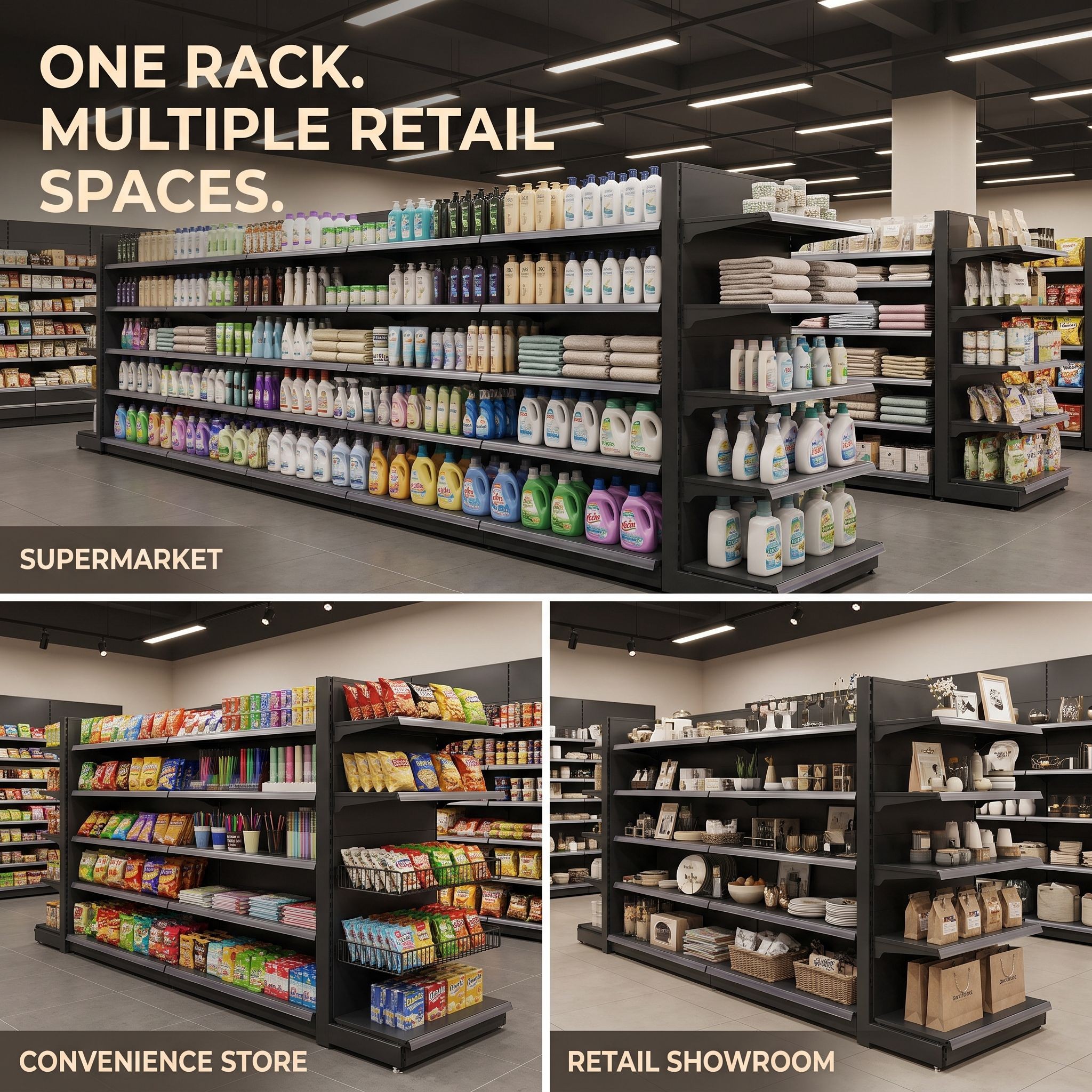
The systematic operational design of supermarket shelving goes beyond the mere display of merchandise; it functions as a sales system that helps supermarkets increase revenue, optimize customer flow, and manage inventory. In the retail industry, the selection of shelving units, the floor plan layout, and the vertical arrangement of products are all grounded in rigorous principles of consumer psychology and spatial dynamics.
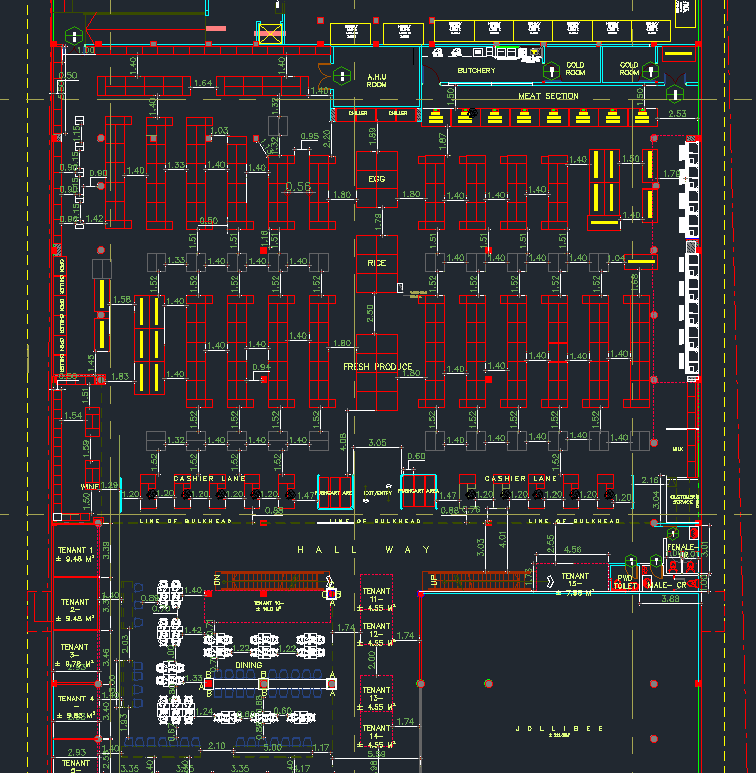
II. Three Major Floor Layouts for Retail Shelving
The arrangement of shelving within a retail store directly determines the "customer flow" (the path customers take through the store) and the duration of their visit:
1. Grid Layout
• Characteristics: Shelves and shopping aisles are arranged in a rectangular or square grid pattern, with main and secondary aisles of uniform width.
• Advantages: Offers the highest space utilization; high standardization helps reduce store setup costs. Clear product categorization allows customers to quickly locate specific items—ideal for high-frequency, purpose-driven shopping trips involving a shopping cart.
• Disadvantages: The atmosphere can feel somewhat monotonous or formal; customers may take shortcuts, potentially missing certain promotional areas.
2. Island Layout
• Characteristics: Independent, disconnected shelving units—often circular or uniquely shaped—are placed throughout the store, creating a series of "product islands."
• Advantages: Visually appealing and creates a lively environment; highly effective for highlighting specific brands or dedicated product categories.
• Disadvantages: A higher number of aisles can fragment customer traffic, and space utilization is generally lower than that of a grid layout. This is often used as a supplementary layout for specific sections within large supermarkets (e.g., cosmetics or deli counters).
3. Free-Flow Layout
• Characteristics: Shelving units are arranged using irregular, curved, or diagonal configurations, designed to guide the natural movement of customers.
• Advantages: Fosters a relaxed, welcoming shopping atmosphere; encourages customers to wander throughout the store, thereby increasing the likelihood of impulse purchases.
• Disadvantages: Results in lower sales-per-square-foot (space efficiency); complicates inventory management and restocking; and is unsuitable for large, heavy merchandise.
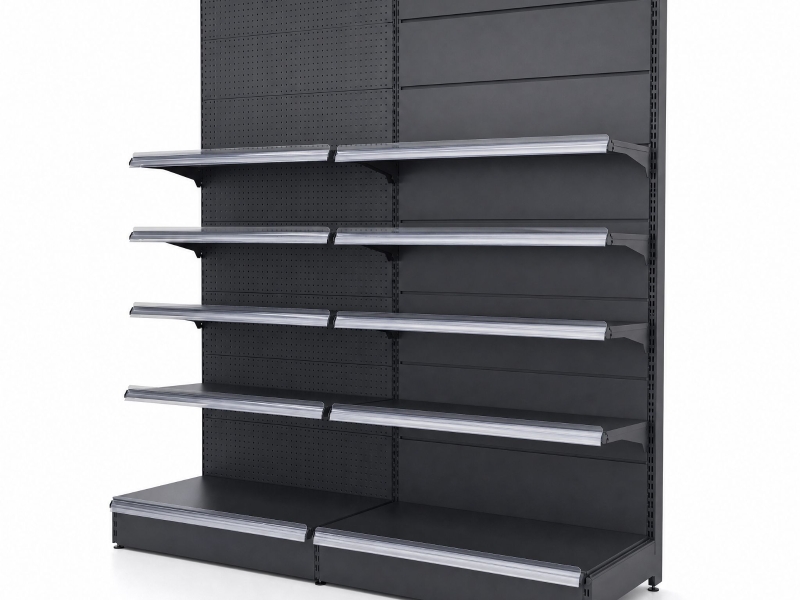
Supermarket shelves are the iconic shelving units used in supermarkets to display, showcase, and store merchandise.
• Double-sided island shelving: Shelving units placed in the middle of a supermarket, with display space on both sides. These serve as the "workhorses" of the store, used for items such as snacks, beverages, and daily necessities.
• Single-sided wall shelving: Shelving units with display space on only one side, positioned against a wall. These are typically built to be taller to make the most of vertical wall space.
• End-cap shelving: The shelving units located at the ends of double-sided aisles. Situated where customers frequently walk and turn, these spots offer high visibility and are typically used to showcase discounted items, promotional goods, or popular seasonal products.
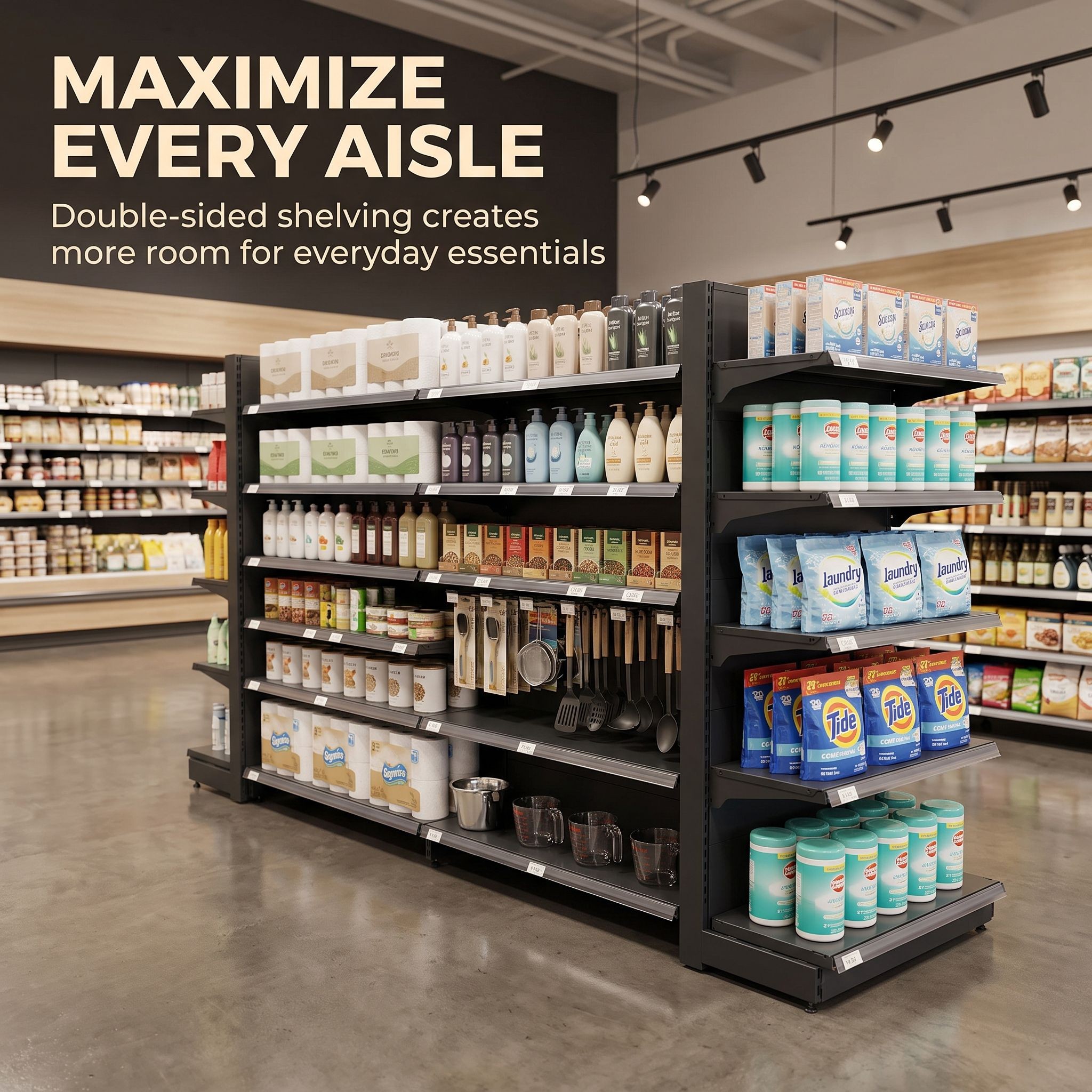
On a set of retail shelves, the height at which a product is placed significantly impacts its sales volume:
• The "Golden Zone" (120cm – 160cm): Spanning from roughly eye level to chest height for an average adult, this area is the most visible and accessible. Consequently, it is reserved for high-margin items—the products a store is most keen to sell.
• Upper and Lower Shelves: Positions above or below the Golden Zone are typically used for items that are bulky, heavy, low-margin, or so well-known that customers will actively look up or down to find them.
• A Special Case (The "Children’s Zone"): The very bottom shelf—where adults would need to bend down—is often strategically stocked with cartoon toys and snacks for children, as this aligns perfectly with a child’s eye level.